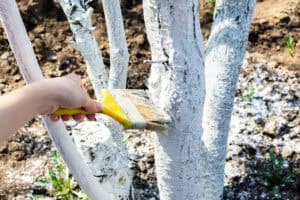
Sunscald and Bark Damage Trees DFW
Protect Your Trees from Sunscald and Bark Damage As May arrives in the Dallas-Fort Worth area, homeowners begin to enjoy …


Locally owned and family operated, proudly serving North Texas. Get your free, no-obligation quote. Or call (972) 521-1552.
Free QuoteFort Worth is one of the largest cities in Texas and one of the most diverse in terms of tree health environments. From established neighborhoods in the historic west side with mature live oak canopy that has grown together over generations, to rapidly developing areas in the north and south where trees are being planted into disturbed construction soil, Fort Worth property owners face a wide range of tree health challenges that demand genuine expertise rather than generic service. Trees Hurt Too, Inc. brings ISA Certified Arborist-led plant health care to Fort Worth homeowners and commercial property managers with the credentials, the diagnostic tools, and the North Texas experience to protect the trees that make Fort Worth properties valuable.
"Fort Worth has some of the most beautiful mature live oak canopy of any city in Texas. Those trees have been growing for 50, 60, 70 years in some of the older neighborhoods. They are irreplaceable. And they are facing the same oak wilt pressure, the same clay soil stress, and the same borer activity that affects oaks across the entire region. The difference between a tree that makes it through the next decade and one that does not is almost always whether someone got a professional evaluation before the condition became irreversible." Ken, ISA Certified Arborist Tx-3265-A | Owner, Trees Hurt Too, Inc.
Our owner Ken holds ISA Certified Arborist credential number Tx-3265-A issued by the International Society of Arboriculture. Our team serves Fort Worth and surrounding communities with free on-site evaluations and no-obligation estimates. Call (972) 521-1552 to schedule your evaluation or visit our Tree Health Care and Arborist Services page for a complete overview of what our certified team provides across the DFW area.
Fort Worth sits in the heart of Tarrant County where the environmental pressures on trees are among the most intense in North Texas. Understanding what drives tree decline in Fort Worth is the first step toward protecting the mature canopy that defines the city's established neighborhoods.
The expansive clay soil underlying Fort Worth compacts easily, holds water unevenly, and binds mineral nutrients chemically in ways that make surface fertilization largely ineffective. During wet periods this clay creates anaerobic root zone conditions that lead to root rot and fungal colonization. During dry periods the same clay contracts and cracks, physically disrupting the fine feeder roots responsible for water and nutrient absorption. Most Fort Worth trees are fighting their soil environment continuously without professional root zone support. Our deep root feeding program addresses this by delivering nutrition directly into the root zone under pressure.
Fort Worth summers routinely exceed 100 degrees Fahrenheit for extended stretches. This sustained heat depletes tree energy reserves and weakens natural immune function. When drought follows heat, the combination creates ideal conditions for opportunistic pathogens like hypoxylon canker to colonize trees that would otherwise resist infection. In severe drought years, our certified arborists see significantly more hypoxylon canker cases throughout Fort Worth as stressed trees lose the ability to compartmentalize fungal invasion.
Fort Worth's established neighborhoods contain some of the most densely connected live oak populations in Tarrant County. Live oaks grow with root systems that graft naturally to neighboring trees underground, creating transmission networks that allow oak wilt to move from one property to the next without any above-ground indication. A single infected tree in a connected grove can spread the disease to every oak on the block before visible symptoms appear. This makes preventive evaluation and management critically important for Fort Worth properties with established live oaks. Learn more at our oak wilt treatment page.
Wood-boring insects are one of the most destructive tree pest groups in Fort Worth. Borers tunnel beneath bark and destroy vascular tissue from the inside, typically going undetected until the infestation is well established. By the time exit holes and sawdust-like frass are visible at the surface, the internal damage has often been developing for one to two years. Our microinjection technology is the most effective tool available for both treating active borer infestations and preventing new ones. Learn more at our tree injections page.
Oakley says...
No charge. No obligation. An ISA Certified Arborist visits your property and gives you honest answers before recommending anything.
Every Trees Hurt Too service in Fort Worth begins with a free on-site evaluation. We assess your trees, evaluate soil conditions, identify existing disease or pest activity, and build a customized treatment plan before recommending anything.
Our ISA Certified Arborist diagnoses the specific disease, pest, or environmental stressor affecting your Fort Worth trees before recommending any treatment. Fort Worth's mix of established canopy, clay soil, and heat stress creates conditions where accurate diagnosis is the most important step in successful tree care. Visit our North Texas tree disease identification page for a guide to the conditions we most commonly find in Fort Worth.
For Fort Worth properties with live oaks and red oaks, preventive oak wilt management is one of the highest-value investments available. Our certified arborist provides propiconazole fungicide injections for high-value oaks, root barrier installation to interrupt underground spread, and strict wound management protocols during the February through June high-risk season. Learn more at our oak wilt treatment page.
A declining Fort Worth tree is not automatically a lost tree. Our sick tree treatment programs combine accurate diagnosis with targeted interventions including root zone correction, injection therapy, and ongoing monitoring. Learn more at our sick tree treatment page. For urgent tree concerns, visit our tree doctor page.
Our deep root feeding program bypasses Fort Worth's compacted clay surface and delivers carbon-based nutrients and beneficial mycorrhizal fungi directly into the root zone under pressure. Trees on this program show improved canopy density, drought tolerance, and disease resistance within one to two growing seasons. Learn more at our deep root feeding page.
Our microinjection technology delivers fungicides, insecticides, or nutrients directly into a tree's vascular system with protection lasting up to two years. This is the most effective delivery method available for oak wilt management, borer control, and vascular fungal diseases in Fort Worth trees. Learn more at our tree injections page.
Hypoxylon canker, leaf spot, anthracnose, root rot, and powdery mildew each require targeted treatment calibrated to the specific pathogen. Our certified arborist selects the correct chemistry and timing before recommending any fungicide program for your Fort Worth trees. Learn more at our tree fungus treatment page.
Our pest control program addresses borers, aphids, scale insects, spider mites, bagworms, and webworms using systemic injections, soil drenches, and targeted foliar treatments calibrated to the pest species and infestation stage. Learn more at our shrub and tree pest control page.
Our Hydretain Root Zone Moisture Management program regulates root zone hydration across Fort Worth's clay soil environment, reducing standing water stress after heavy rain and supporting consistent oxygen levels year-round. Learn more at our moisture management page.
Fort Worth has no shortage of tree companies. What is genuinely rare is a company that built its entire operation around the science of plant health care, led by an ISA Certified Arborist with specific experience diagnosing and treating the conditions that affect Fort Worth trees year after year.
"I have been doing this work in Fort Worth and Tarrant County for a long time and what I see consistently is that the trees we lose are almost never lost to conditions that could not have been treated if someone had called earlier. Oak wilt caught in the first season is manageable. Oak wilt caught two seasons in is usually not. Hypoxylon canker in a drought-stressed tree that has been getting deep root feeding is a problem we can work with. The same canker in a tree that has been neglected for years often is not. Early is everything." Ken, ISA Certified Arborist Tx-3265-A | Owner, Trees Hurt Too, Inc.
For our full credentials visit our ISA Certified Arborist page. For our complete arborist services overview visit our Tree Health Care and Arborist Services page.
Your Tree Cannot Wait
Early diagnosis is the difference between saving and losing a tree. Call our ISA Certified Arborist directly for same-week evaluations throughout the DFW area.
(972) 521-1552Free on-site evaluation • No obligation • Honest answers
In addition to all Fort Worth neighborhoods, Trees Hurt Too serves surrounding communities throughout Tarrant County. If your property is in or near Fort Worth, call us to confirm we cover your area.
For our complete Tarrant County coverage visit our Tarrant County tree service page or call (972) 521-1552.
Trees Hurt Too provides complete tree health care in Fort Worth including tree disease diagnosis, oak wilt prevention and treatment, deep root feeding, microinjection technology, fungal disease management, insect and pest control, root zone moisture management, and dormant oil sprays. All services are delivered by our ISA Certified Arborist-led Licensed Plant Health Care Professionals.
Yes. Owner Ken holds ISA Certified Arborist credential Tx-3265-A and has served Fort Worth properties for over a decade as part of Trees Hurt Too's Tarrant County operations. The team also includes 3 Texas Department of Agriculture Certified Applicators. Learn more at our ISA Certified Arborist page.
The most common tree diseases in Fort Worth include oak wilt, hypoxylon canker, root rot from heavy Tarrant County clay soils, leaf spot, anthracnose, fire blight, bacterial leaf scorch, and chlorosis. For a detailed guide visit our North Texas tree disease identification page.
Yes. Oak wilt is an active and serious threat throughout Fort Worth, particularly in established neighborhoods with mature connected live oak canopy. The disease spreads underground through root grafts and through beetle activity during the February through June high-risk season. Learn more at our oak wilt treatment page.
Call us immediately if you notice thinning canopy especially at the top, yellowing or browning leaves outside the normal cycle, dead branches progressing downward, bark cracking or peeling, fungal growth at the trunk base, or sudden leaf drop in spring or summer. Early evaluation is always the right call. Visit our sick tree treatment page for more detail.
Fort Worth's heavy Tarrant County clay soil compacts easily and binds mineral nutrients chemically, making surface fertilization largely ineffective. Deep root feeding delivers carbon-based nutrients directly into the root zone under pressure, bypassing the compacted clay surface and reaching feeder roots where absorption actually happens. Learn more at our deep root feeding page.
Yes. Trees Hurt Too provides completely free on-site tree evaluations throughout Fort Worth with no obligation and no pressure. Call (972) 521-1552 to schedule your visit today.
We serve all Fort Worth neighborhoods including established areas in the west, south, east, and north, as well as surrounding communities throughout Tarrant County. Call (972) 521-1552 to confirm we cover your specific address or view our service area.
Trees Hurt Too provides ISA Certified Arborist and professional tree health care throughout Fort Worth and surrounding Tarrant County communities. Call (972) 521-1552 to schedule your free on-site evaluation with no obligation. For our full Tarrant County service coverage visit our Tarrant County tree service page. For additional information on tree health research in Texas, visit the Texas A&M AgriLife Extension.
Protect Your Trees Year-Round
Our certified arborist-supervised annual programs include:
On-site evaluation and custom program quote
Get My Custom Program QuoteNo contracts • Cancel anytime
Stay informed about lawn care, tree care and pest related issues in your area!
Protect Your Trees from Sunscald and Bark Damage As May arrives in the Dallas-Fort Worth area, homeowners begin to enjoy …
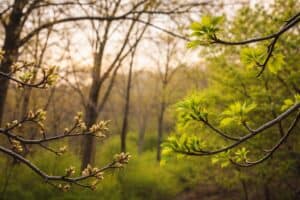
Why Trees Drop Leaves in May in the Dallas-Fort Worth Area If you’ve noticed leaves scattered across your lawn in …
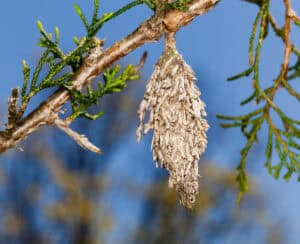
Identify and control bagworms before they damage your North Texas trees and shrubs this season.