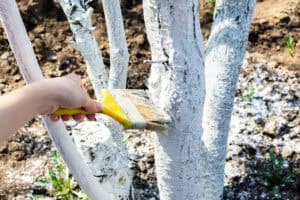
Sunscald and Bark Damage Trees DFW
Protect Your Trees from Sunscald and Bark Damage As May arrives in the Dallas-Fort Worth area, homeowners begin to enjoy …


Locally owned and family operated, proudly serving North Texas. Get your free, no-obligation quote. Or call (972) 521-1552.
Free QuoteDallas County is one of the most densely urbanized counties in Texas, and its trees face a compounding set of health challenges that general tree services are not equipped to diagnose or treat. Heat island conditions in dense neighborhoods, soil compaction from decades of construction, clay soils that swing between waterlogged and drought-stressed, and an expanding oak wilt threat across established residential canopy all contribute to a tree health environment that demands genuine expertise. Trees Hurt Too, Inc. brings ISA Certified Arborist-led plant health care to homeowners and property managers throughout Dallas County with the credentials and North Texas field experience to make a real difference.
"Dallas County trees face a challenge that most people overlook. When a neighborhood has been built up over decades, the soil around the trees has usually been compacted, graded, filled, and disturbed multiple times. The root system that should extend widely from that tree has been compressed into a fraction of the space it needs. Then you add the heat island effect of all that pavement and rooftop surface, and you have trees that are working much harder than they should just to survive. That stress is where disease gets its opening." Ken, ISA Certified Arborist Tx-3265-A | Owner, Trees Hurt Too, Inc.
Our owner Ken holds ISA Certified Arborist credential number Tx-3265-A issued by the International Society of Arboriculture. We serve communities throughout Dallas County with free on-site evaluations and no-obligation estimates. Call (972) 521-1552 to schedule yours or visit our Tree Health Care and Arborist Services page for a complete overview of what our certified team provides.
Dallas County's combination of urban density, clay-heavy soil, intense summer heat, and oak wilt pressure creates tree health conditions that are among the most demanding in North Texas. Understanding these factors is the foundation of effective tree care across the county.
Dense urban and suburban neighborhoods in Dallas County experience significantly higher surface temperatures than surrounding areas. Pavement, rooftops, and reduced tree canopy concentrate and radiate heat in ways that push trees beyond their natural temperature tolerance. Urban trees throughout Dallas County are effectively growing in conditions several degrees warmer than their native range, creating chronic thermal stress that weakens immune function and opens the door to disease and pest infestation.
Established Dallas County neighborhoods have experienced repeated cycles of construction, grading, utility trenching, and vehicle traffic that compact clay soils well below the surface. Compacted soil eliminates the pore space roots need for oxygen, water, and nutrient exchange. Trees growing in severely compacted urban soil operate with a fraction of the functional root zone they need, creating chronic nutrient and moisture stress that predisposes them to every major disease and pest condition we treat. Our deep root feeding program addresses this by delivering nutrition directly into the root zone under pressure, bypassing the compacted surface layer entirely.
Dallas County shares the expansive clay soil profile common across the DFW region. Clay binds mineral nutrients chemically, holds water unevenly, and cracks during dry periods, physically disrupting fine feeder roots. Combined with urban compaction, this creates a root environment that most trees cannot navigate without professional intervention.
Many of Dallas County's established residential neighborhoods have mature live oak canopy that has grown together over decades, creating dense root graft networks that allow oak wilt to move silently underground from one property to the next. When one live oak in a connected cluster becomes infected, the disease can reach every connected tree before any above-ground symptoms appear. Preventive management is critical in these high-canopy environments. Learn more at our oak wilt treatment page.
Oakley says...
No charge. No obligation. An ISA Certified Arborist visits your property and gives you honest answers before recommending anything.
Every service at Trees Hurt Too begins with a free on-site evaluation. We assess your trees, evaluate soil conditions, and build a customized treatment plan before recommending anything.
Accurate diagnosis is the only path to the right treatment. Our ISA Certified Arborist identifies the specific pathogen, pest, or stressor causing decline before any product is recommended. Dallas County's urban tree population presents a wide range of conditions that look similar on the surface but require completely different treatment approaches. We diagnose first, always. Visit our North Texas tree disease identification page for a guide to common conditions we find across the region.
For properties with mature live oaks in established Dallas County neighborhoods, preventive oak wilt management is essential. Our certified arborist provides propiconazole fungicide injections, root barrier installation, and wound management protocols during the high-risk February through June beetle season. Learn more at our oak wilt treatment page.
A declining tree in Dallas County is not automatically a lost tree. In most cases we evaluate, trees showing early disease or stress signs can be treated and restored when a certified professional gets involved early. Learn more at our sick tree treatment page.
Standard surface fertilization fails in Dallas County's compacted urban clay soils. Our deep root feeding program delivers carbon-based nutrients and beneficial mycorrhizal fungi directly into the root zone under pressure. Trees show improved canopy density, drought tolerance, and disease resistance within one to two growing seasons. Learn more at our deep root feeding page.
Our microinjection technology delivers fungicides, insecticides, or nutrients directly into a tree's vascular system with treatment lasting up to two years. Learn more at our tree injections page.
Hypoxylon canker, leaf spot, anthracnose, root rot, and powdery mildew each require specific chemistry calibrated to the pathogen involved. Our certified arborist selects the correct approach before recommending any fungicide program. Learn more at our tree fungus treatment page.
Borers, aphids, scale insects, spider mites, bagworms, and webworms cause significant damage across Dallas County's urban landscape. Our pest control program uses systemic injections, soil drenches, and targeted foliar treatments. Learn more at our shrub and tree pest control page.
Our Hydretain Root Zone Moisture Management program regulates root zone hydration, reduces standing water stress, and supports consistent oxygen levels year-round. Learn more at our moisture management page.
Most tree companies in Dallas County focus on mechanical work. What they cannot provide is the diagnostic depth that comes from ISA certification, Texas Department of Agriculture licensing, and two decades of specific experience with the urban tree health conditions that define this county.
"The difference between a credentialed arborist and a general tree service becomes most clear in diagnosis. When I evaluate a tree in a Dallas County neighborhood, I am looking at soil compaction history, root zone oxygen levels, vascular condition, insect pressure patterns for that species in this climate, and the oak wilt risk from neighboring connected trees all at the same time. That comprehensive picture is what accurate diagnosis requires and what ISA certification trains you to build." Ken, ISA Certified Arborist Tx-3265-A | Owner, Trees Hurt Too, Inc.
For a full overview of our credentials, visit our ISA Certified Arborist page. For urgent sick tree concerns, visit our tree doctor page.
Trees Hurt Too provides ISA Certified Arborist and tree health care services across Dallas County communities. Select your city below for location-specific tree care information.
Do not see your city? Call us at (972) 521-1552. We serve additional communities throughout Dallas County and the DFW metroplex. View our full service area.
Your Tree Cannot Wait
Early diagnosis is the difference between saving and losing a tree. Call our ISA Certified Arborist directly for same-week evaluations throughout the DFW area.
(972) 521-1552Free on-site evaluation • No obligation • Honest answers
Trees Hurt Too provides complete tree health care throughout Dallas County including tree disease diagnosis, oak wilt prevention and treatment, deep root feeding, microinjection technology, fungal disease management, insect and pest control, root zone moisture management, and dormant oil sprays. All services are delivered by our ISA Certified Arborist-led team.
Yes. Owner Ken holds ISA Certified Arborist credential Tx-3265-A and serves communities throughout Dallas County. The team also includes 3 Texas Department of Agriculture Certified Applicators and holds memberships in the International Society of Arboriculture and the Texas Tree Care Industry Association.
The most common tree diseases in Dallas County include oak wilt, hypoxylon canker, root rot, leaf spot, anthracnose, bacterial leaf scorch, fire blight, and chlorosis. Urban heat island conditions and dense clay soils make trees especially vulnerable. For a complete guide visit our North Texas tree disease identification page.
Yes. Oak wilt is an active and expanding threat throughout Dallas County. The disease spreads underground through root grafts in connected live oak clusters and through sap-feeding beetles during the February through June high-risk season. Preventive management is essential for Dallas County properties with live oaks. Learn more at our oak wilt treatment page.
Dallas County urban trees face compounded stress from heat island effects, soil compaction from decades of construction, clay soil limiting root zone oxygen and nutrient access, and elevated pest pressure from stressed urban tree populations. These factors together require genuine arborist expertise rather than generic treatment programs.
Deep root feeding bypasses the compacted clay surface that blocks nutrient access and delivers carbon-based nutrients and mycorrhizal fungi directly where absorption happens. Trees show measurably improved canopy density, drought tolerance, and disease resistance within one to two growing seasons. Learn more at our deep root feeding page.
Yes. We provide certified arborist services for residential homes, commercial properties, HOA communities, schools, hospitals, retail centers, and municipal properties throughout Dallas County. Learn more at our commercial tree care page.
Call us at (972) 521-1552 or request your evaluation through our contact page. A Licensed Plant Health Care Professional will schedule a free on-site visit throughout Dallas County with no charge, no obligation, and no pressure.
Trees Hurt Too provides ISA Certified Arborist and professional tree health care throughout Dallas County and connecting communities in Tarrant County and Denton County. View our complete service area or call (972) 521-1552 to confirm we cover your neighborhood. For additional information on tree health research in Texas, visit the Texas A&M AgriLife Extension.
Protect Your Trees Year-Round
Our certified arborist-supervised annual programs include:
On-site evaluation and custom program quote
Get My Custom Program QuoteNo contracts • Cancel anytime
Stay informed about lawn care, tree care and pest related issues in your area!
Protect Your Trees from Sunscald and Bark Damage As May arrives in the Dallas-Fort Worth area, homeowners begin to enjoy …
Why Trees Drop Leaves in May in the Dallas-Fort Worth Area If you’ve noticed leaves scattered across your lawn in …
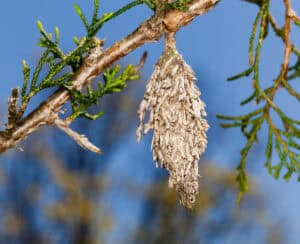
Identify and control bagworms before they damage your North Texas trees and shrubs this season.