
Sunscald and Bark Damage Trees DFW
Protect Your Trees from Sunscald and Bark Damage As May arrives in the Dallas-Fort Worth area, homeowners begin to enjoy …


Locally owned and family operated, proudly serving North Texas. Get your free, no-obligation quote. Or call (972) 521-1552.
Free QuoteThe most important part of a tree is the part you cannot see. Root systems are the foundation of every tree's health, structural stability, disease resistance, and drought tolerance. In Tarrant County's heavy clay soils, those root systems face chronic challenges that standard surface fertilization cannot address. Deep root feeding delivers carbon-based nutrients, beneficial microbes, and soil conditioners directly into the root zone under pressure, bypassing the compacted clay surface layer and reaching the feeder roots where absorption actually happens.
"Surface fertilization on a compacted clay soil is a largely wasted effort. The nutrients sit at the surface, run off in rain, or get bound up in the clay chemistry before roots can access them. When we deep feed a tree, we are bypassing all of that and putting exactly what the root system needs exactly where it can use it. The difference in tree response is visible within a single growing season in most cases." Ken, ISA Certified Arborist Tx-3265-A | Owner, Trees Hurt Too, Inc.
Deep root feeding is a core component of our Tree Doctor and Arborist Services and one of the most effective preventive investments a Tarrant County homeowner can make in their trees. Call (972) 521-1552 for a free consultation.
Standard fertilization approaches developed for loamy or sandy soils do not translate to the clay-heavy environment that defines most of Tarrant County. Understanding why requires understanding how clay soil behaves differently from other soil types and what that means for tree root access to nutrition.
Trees Hurt Too uses innovative carbon-based fertilization rather than conventional synthetic nitrogen programs. Carbon-based products feed the soil biology as well as the tree, building the microbial ecosystem that healthy root systems depend on. Conventional high-nitrogen programs can produce rapid visible growth while actually weakening root systems and increasing vulnerability to disease, because the rapid top growth is not supported by proportionate root development. Our approach prioritizes long-term tree health over short-term cosmetic response.
"The carbon-based approach changed how I think about tree nutrition. Conventional fertilization feeds the tree. Carbon-based feeding feeds the soil that feeds the tree. That distinction sounds subtle but the results are not. The root development we see in trees that have been on our program for two or three years is dramatically different from what a standard fertilization program produces." Ken, ISA Certified Arborist Tx-3265-A | Owner, Trees Hurt Too, Inc.
Oakley says...
Oakley has seen what happens when tree problems go undiagnosed. A free on-site evaluation from our ISA Certified Arborist costs nothing and could save your trees.
Root inoculation takes the deep root feeding concept further by introducing specific strains of mycorrhizal fungi and beneficial soil bacteria directly into the root zone. These microorganisms form symbiotic partnerships with tree roots, effectively extending the root system's reach and dramatically improving its ability to absorb water and nutrients from the surrounding soil.
Mycorrhizal networks have been documented to extend a tree's effective root surface area by up to 700 times compared to roots without fungal symbiosis. In Tarrant County's compacted clay soils where root systems are frequently limited in their physical ability to spread, this biological enhancement represents one of the most cost-effective investments available for long-term tree health. Trees connected to active mycorrhizal networks show significantly improved drought tolerance, better nutrient status, and stronger resistance to root rot pathogens.
Root inoculation is frequently combined with our moisture management program for maximum root zone health improvement in Tarrant County's challenging clay environment.
Deep root feeding is not an instant fix. It is a foundational investment in the biological health of your trees that produces compounding results over time. Here is what our clients in Tarrant County typically observe across different timeframes:
Learn more about how deep root feeding integrates with our complete tree health program on our Tree Doctor and Arborist page. For information on how root zone hydration works alongside deep feeding, visit our moisture management page.
Your Tree Cannot Wait
Early diagnosis is the difference between saving and losing a tree. Call our ISA Certified Arborist directly for same-week evaluations throughout the DFW area.
(972) 521-1552Free on-site evaluation • No obligation • Honest answers
Our ISA Certified Arborist recommends deep root feeding as a preventive and restorative treatment for virtually all mature trees in Tarrant County's clay soil environment. Certain situations make it particularly valuable:
For trees already showing signs of disease or pest activity, deep root feeding is typically combined with targeted treatment for the specific condition. Visit our sick tree treatment page for information on how we combine multiple treatments into a comprehensive recovery program.
Deep root feeding is a professional tree care technique where carbon-based nutrients, beneficial microbes, and soil conditioners are injected directly into the root zone under pressure. This bypasses compacted clay soil at the surface and delivers nutrition exactly where feeder roots can absorb it, making it far more effective than surface fertilization in North Texas clay soils.
Standard surface fertilization applies nutrients to the soil surface where much of the product is lost to evaporation, surface runoff, and chemical binding in clay before reaching the root zone. Deep root feeding delivers nutrients under pressure at the specific depth where active feeder roots are concentrated. In Tarrant County's compacted clay soils, the difference in uptake efficiency between the two approaches is significant.
Root inoculation introduces beneficial mycorrhizal fungi and soil bacteria directly into the root zone alongside the nutrient delivery. These microorganisms form symbiotic partnerships with tree roots that extend the root system's effective reach and improve its ability to absorb water and nutrients from surrounding soil. Research shows mycorrhizal networks can expand a tree's effective root surface area by up to 700 times, an enormous advantage in compacted urban soils.
Most trees in Tarrant County's clay soil environment benefit from deep root feeding one to two times per year. Trees showing active stress, disease recovery, or significant nutrient deficiency may benefit from more frequent applications during the recovery period. Our ISA Certified Arborist recommends a specific schedule based on each tree's species, condition, and soil environment at your property.
All mature trees in Tarrant County's clay soil benefit from deep root feeding, but trees showing nutrient deficiency, transplant stress, disease recovery, drought stress, or declining canopy density show the most significant improvement. Oak trees at risk from oak wilt particularly benefit from the strengthened root systems that deep feeding produces over time.
Many trees show improved foliage color within four to eight weeks of the initial application. Canopy density improvement typically becomes noticeable within one full growing season. Significantly stronger root development and improved drought tolerance become measurable after two or more seasons of consistent deep root feeding. Our certified arborist gives you realistic, specific expectations at the initial evaluation.
Yes. Deep root feeding delivers nutrients directly into the root zone with minimal surface disturbance. The carbon-based products we use are safe for surrounding turf, ornamental plants, pets, and family members. Our licensed applicators follow strict protocols on every application to protect the surrounding landscape.
Yes. Deep root feeding plays an important role in sick tree recovery by improving the nutritional and biological foundation that supports the tree's immune response. For trees recovering from fungal disease, borer infestation, or stress-related decline, deep root feeding is frequently combined with targeted treatment for the specific condition as part of a comprehensive recovery program. Visit our sick tree treatment page for more detail.
Deep root feeding and moisture management work together to address the two most common limiting factors for tree health in Tarrant County's clay soils: nutrient availability and root zone hydration. Deep root feeding improves the soil biology and nutrient delivery to the root zone. Moisture management using Hydretain Root Zone technology ensures the root zone maintains consistent hydration between rainfall and irrigation cycles. Combined, they address the full range of soil environment issues that cause tree decline in North Texas. Learn more at our moisture management page.
Trees Hurt Too provides completely free on-site consultations for deep root feeding assessment with no obligation. Costs vary based on the number and size of trees being treated and the specific program recommended. Call (972) 521-1552 for a free evaluation and an honest estimate with no pressure.
Call us at (972) 521-1552 or request your free consultation through our contact page. A Licensed Plant Health Care Professional will evaluate your trees, assess your soil conditions, and build a customized deep root feeding program for your property. Check our service area to confirm we cover your neighborhood. For additional information on soil biology and root zone management, visit the Texas A&M AgriLife Extension.
Trees Hurt Too provides deep root feeding and root inoculation services throughout Tarrant County and surrounding North Texas communities. View our full service area and call (972) 521-1552 to schedule your free consultation.
Do not see your city? Call us anyway at (972) 521-1552. We serve additional communities throughout the DFW metroplex.
Protect Your Trees Year-Round
Our certified arborist-supervised annual programs include:
On-site evaluation and custom program quote
Get My Custom Program QuoteNo contracts • Cancel anytime
Stay informed about lawn care, tree care and pest related issues in your area!
Protect Your Trees from Sunscald and Bark Damage As May arrives in the Dallas-Fort Worth area, homeowners begin to enjoy …
Why Trees Drop Leaves in May in the Dallas-Fort Worth Area If you’ve noticed leaves scattered across your lawn in …
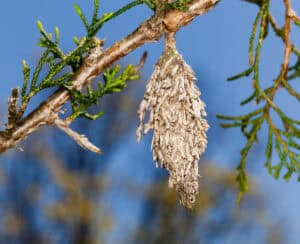
Identify and control bagworms before they damage your North Texas trees and shrubs this season.