

Sunscald and Bark Damage Trees DFW
Protect Your Trees from Sunscald and Bark Damage As May arrives in the Dallas-Fort Worth area, homeowners begin to enjoy …


Locally owned and family operated, proudly serving North Texas. Get your free, no-obligation quote. Or call (972) 521-1552.
Free QuoteOak wilt is the most destructive tree disease in Texas and one of the most urgent threats facing Tarrant County homeowners with oak trees on their property. Once oak wilt establishes in a neighborhood, it spreads through underground root connections and insect activity in ways that can devastate entire clusters of mature oaks within a single growing season. At Trees Hurt Too, Inc., our ISA Certified Arborist has the training, tools, and local knowledge to diagnose oak wilt early, treat trees showing initial symptoms, and protect healthy oaks before the disease reaches them.
"Oak wilt is the diagnosis I take most seriously. Not because every case is hopeless, but because the window for effective action is so narrow. A live oak that looks mildly off in April can be dead by July. The disease moves that fast. If you have oaks and you have not had them evaluated, do it before you see symptoms, not after." Ken, ISA Certified Arborist Tx-3265-A | Owner, Trees Hurt Too, Inc.
Oak wilt has been confirmed in more than 75 Texas counties and continues to spread northward through the DFW region each year. Properties throughout Tarrant County are at ongoing risk. Do not wait for visible symptoms before calling a certified arborist. Return to our Tree Doctor and Arborist Services page for a complete overview of all tree health services we provide.
Oak wilt is a vascular disease caused by the fungus Bretziella fagacearum. It invades the water-conducting tissues of oak trees, blocking the flow of water and nutrients from the roots to the canopy. Once the vascular system is compromised, the tree cannot sustain its foliage and collapses from the top down. The speed and severity of decline depends on the oak species involved, which is why species identification is the first step in any oak wilt management plan.
Early identification gives our certified arborist the best possible options for treatment and containment. The earlier we can evaluate an at-risk tree the more tools we have available. Learn the warning signs before they escalate beyond the treatable range.
"The veinal necrosis pattern on oak leaves is one of those things that once you have seen it you cannot unsee it. It is very distinctive. The problem is that by the time leaves are showing that pattern the disease is already well established in the vascular system. That is why I always want to see the trees before any symptoms appear when I know there is oak wilt activity in the neighborhood." Ken, ISA Certified Arborist Tx-3265-A | Owner, Trees Hurt Too, Inc.
For a complete guide to identifying oak wilt and other North Texas tree diseases visit our North Texas Tree Disease Identification page.
Oakley warns...
Oak wilt spreads through beetle activity during this window. Oakley recommends a professional evaluation now — before any wounds or pruning occur on your oak trees.
Treatment options depend entirely on the stage of infection, the oak species involved, and the risk to neighboring trees. Our ISA Certified Arborist evaluates each situation individually before making any recommendation. We will always give you an honest assessment of what is possible before recommending any investment.
For high-value oaks in neighborhoods where oak wilt is present or where the property owner wants proactive protection, our certified arborist administers propiconazole fungicide injections directly into the tree's vascular system using our microinjection technology. This treatment circulates through the vascular tissue and provides protection for up to two years. It is the most effective preventive tool available for oak wilt management in live oaks.
Trees showing initial symptoms of oak wilt may benefit from fungicide injection treatment if the infection has not yet reached an advanced stage. Our certified arborist assesses canopy loss, symptom progression rate, and root connection risks to determine whether treatment is likely to be effective. Early intervention always offers the best probability of success.
For live oak clusters where underground root spread is the primary risk, trenching between trees and installing physical root barriers interrupts the underground pathway the disease uses to move from infected to healthy trees. This is used in combination with fungicide injection on trees that remain healthy within an affected cluster. Barriers must extend to sufficient depth to be effective in North Texas clay soils.
Fresh wounds on oak trees during February through June must be sealed immediately with wound dressing or latex-based paint to prevent sap-feeding beetles from accessing the exposed tissue. This is one of the most important and most frequently overlooked prevention steps. Any tools used on oaks during this period should be disinfected between trees to prevent mechanical transmission of spores.
Dead or rapidly declining red oaks should be addressed promptly to eliminate them as a source of fungal spore mat production before beetles can spread spores to healthy neighboring oaks. Our certified arborist advises on timing and approach for managing infected material based on the specific conditions at your property.
Early-stage oak wilt can be slowed and in some cases arrested through propiconazole fungicide injections administered by a certified arborist. Advanced infections are difficult to reverse. The most effective approach is prevention through fungicide injections on high-value oaks before infection occurs, combined with wound management protocols during high-risk spring months. Call us at the first sign of any symptom.
The classic early sign of oak wilt is veinal necrosis, where leaves show brown discoloration along the veins while surrounding tissue remains green or yellow. Additional signs include sudden leaf drop in spring or summer outside the normal seasonal cycle, rapid canopy thinning from the top down, and in live oak clusters, multiple trees beginning to decline simultaneously indicating underground root spread. Learn more at our tree disease identification page.
Oak wilt spreads two ways. Through sap-feeding nitidulid beetles that carry fungal spores from infected trees to fresh wounds on healthy oaks, and through underground root grafts between neighboring oaks, particularly live oaks, which can transmit infection to connected trees up to 50 feet or more away through the root system without any above-ground indication.
The highest risk period for beetle-transmitted oak wilt in Texas is February through June when sap-feeding beetle activity peaks and fungal spore mats on recently dead infected trees are actively producing spores. Oak wounds from any cause during this period should be sealed immediately. Outside this window risk is lower but not eliminated, and underground root spread continues year-round.
Red oaks typically die within two to six weeks of showing first visible symptoms. Live oaks decline more slowly, often over one to several seasons, but can spread the disease underground to neighboring trees throughout the entire decline period. White oaks are less susceptible and decline more gradually but can still be lost to advanced infection.
Trees Hurt Too provides free on-site evaluations for oak wilt assessment with no obligation. Treatment costs vary depending on the number and size of trees, the stage of infection, and the scope of the management plan needed. Call (972) 521-1552 for a free evaluation and an honest estimate with no pressure.
Yes. Root barrier installation between infected and healthy trees can interrupt underground spread through root grafts. Addressing infected red oaks promptly eliminates their role as a beetle-spread source. Our certified arborist designs containment strategies tailored to your specific property layout and the trees involved.
Not always. Whether a tree should be treated or managed depends on the species, the stage of infection, and the risk it poses to neighboring healthy oaks. Our ISA Certified Arborist evaluates each situation individually and gives you an honest assessment of every option before any decision is made.
Yes. Propiconazole fungicide delivered via microinjection stays inside the tree's vascular system with no residue on the surrounding soil, grass, or landscape. Our licensed applicators follow strict protocols on every treatment. Once the injection sites have sealed, the surrounding area is safe for family and pets.
Call us at (972) 521-1552 or request your free evaluation through our contact page. If you have oak trees on your property in Tarrant County and there is any oak wilt activity in your neighborhood, we recommend a preventive evaluation before symptoms appear rather than after. Check our service area to confirm we cover your neighborhood.
Our certified arborist provides oak wilt evaluation, treatment, and prevention across Tarrant County and surrounding DFW communities. See our full service area and call (972) 521-1552 to schedule your free evaluation. For additional information on oak wilt management standards, visit the Texas A&M AgriLife Extension, the leading research authority on oak wilt in Texas.
Protect Your Trees Year-Round
Our certified arborist-supervised annual programs include:
On-site evaluation and custom program quote
Get My Custom Program QuoteNo contracts • Cancel anytime
Stay informed about lawn care, tree care and pest related issues in your area!
Protect Your Trees from Sunscald and Bark Damage As May arrives in the Dallas-Fort Worth area, homeowners begin to enjoy …
Why Trees Drop Leaves in May in the Dallas-Fort Worth Area If you’ve noticed leaves scattered across your lawn in …
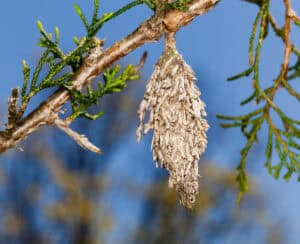
Identify and control bagworms before they damage your North Texas trees and shrubs this season.